
BEARCATS!
SPEED, STYLE, AND A WEST OUT OF TIME

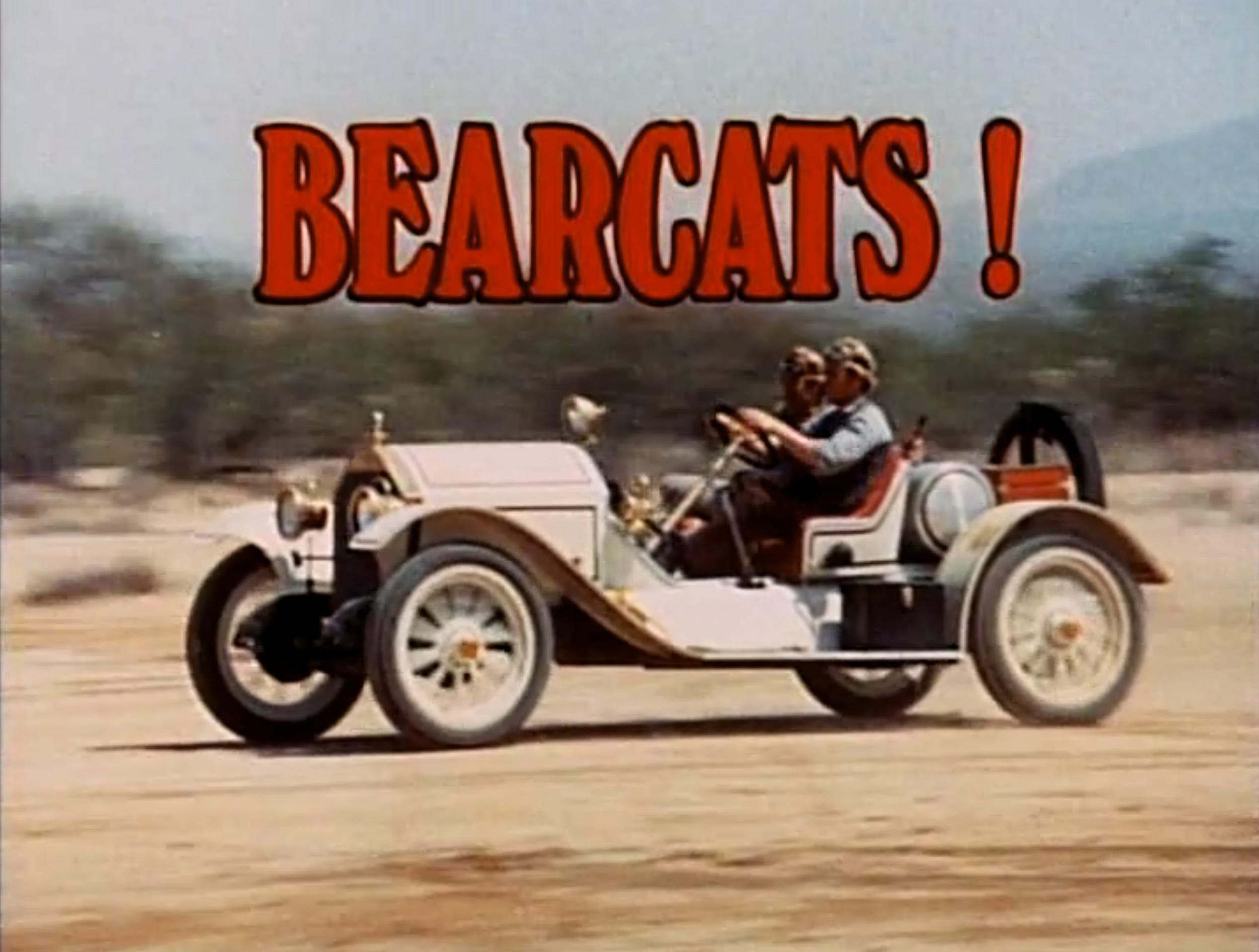
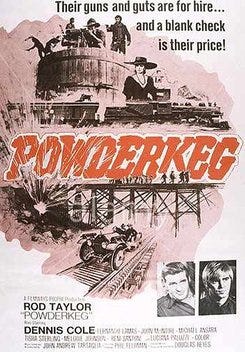
Not every Western rides in on a horse. For a brief run between September 16 and December 30, 1971, plus a two-hour pilot film titled Powderkeg, Bearcats! tried something different. It traded saddles for steering wheels, dust trails for tire tracks, and the steady rhythm of hooves for the roar of an engine. The result was a show which stood apart, even as it struggled to find its footing.
Set in 1914, Bearcats! followed two freelance adventurers, Hank Brackett and Johnny Reach, played by Rod Taylor and Dennis Cole. Their reputation traveled ahead of them, not just because of the jobs they took, but because of how they arrived. Instead of horses, they drove a Stutz Bearcat sports car, a machine as much a statement as a tool. On occasion, they removed the tires and ran along railroad tracks on the rims, pushing the image further into spectacle.
The premise carried a simple hook. In exchange for a blank check, Brackett and Reach took on assignments too dangerous or too complicated for anyone else. Money set the terms. Risk defined the work. Problems without a price drew their interest. Once a price existed, they walked away.
The idea did not come out of nowhere. The show drew clear inspiration from The Professionals, the 1966 film starring Lee Marvin, and from the Fargo novels written by Ben Haas under the name John Benteen. Both sources centered on skilled men hired for difficult jobs, operating within a moral space shaped by experience rather than law. Bearcats! lifted this structure and placed it in a transitional moment between the Old West and the modern world.
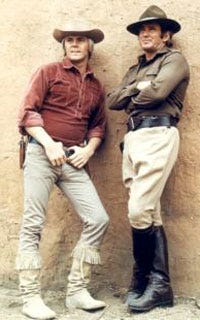
At the center stood Hank Brackett. A former Army captain and veteran of the Spanish-American War, he carried himself with the authority of a man shaped by command. His cavalry uniform and campaign hat reinforced that image, giving him a visual identity tied to an earlier era. Johnny Reach, younger and less experienced, balanced Brackett’s discipline with a quicker edge. Their partnership began when Brackett saved Reach from an unjust hanging. From that moment, they moved forward together, cleaning up trouble spots and taking on paid assignments.
On paper, the pairing worked. In execution, it held at times and slipped at others. Rod Taylor brought presence and confidence, though his relationship with network executives created friction behind the scenes. He pushed for a show which broke away from standard Western patterns, aiming for something sharper, less predictable. Those efforts met resistance. Disputes over direction and censorship limited how far the series could go.
Dennis Cole, coming off Felony Squad, handled the role of Reach with steady energy. His background as a model and stuntman showed in the physical side of the performance, giving the character movement and edge.
The setting opened the door for change. Oil companies replaced land barons. Imperial German agents introduced the shadow of global conflict. The Mexican Revolution stood in for earlier frontier wars. Technology altered the nature of danger. Belt-fed machine guns replaced repeating rifles. The frontier no longer stood alone. It had begun to merge with a wider world.
Even so, the execution often faltered. Anachronisms appeared with regularity. Tanks and aircraft showed up before their time. These moments broke immersion and weakened the foundation. Continuity also shifted from episode to episode. One week, Brackett and Reach worked with established authority. The next, they aligned against it. Such reversals might have explored moral ambiguity. Instead, they created uncertainty around who these men were meant to be.
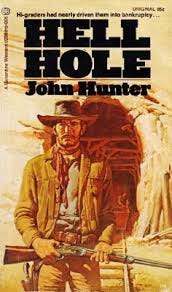
One of the more curious footnotes connected to the series comes through a largely unknown novel. Hell Hole by John Hunter (pseudonym of the prolific W.T. Ballard) uses Brackett and Reach, along with the Bearcat, the blank check, and the full framework of the show. It was not published as a tie-in, nor does it carry the Bearcats! title. The most likely explanation points to a work-for-hire project cancelled when the series ended. With the show gone, the manuscript sat until 1972, when Hunter retitled it and found another publisher. The result stands as a hidden extension of the series, one which slipped past most viewers.
Through all of this, one element remained constant. The Stutz Bearcat. The car defined the show more than any character or storyline. It symbolized speed, independence, and a break from tradition. It also provided visual appeal few Westerns could match. The vehicle stood out in every scene, a bright contrast to the landscape.
Hollywood car designer George Barris created two full-scale replicas for production. Each cost thirteen thousand dollars, a significant investment at the time. Built with metal bodies on custom frames and powered by Ford engines, the cars combined authenticity with safety upgrades. Four-wheel brakes ensured they could handle the demands of filming.
The Bearcat did more than transport the characters. It shaped how the show moved. Chases changed. Action gained speed. The West, once defined by distance and endurance, became something immediate.
Even after cancellation, the car carried on. One of the original replicas was restored and now sits in a private collection, preserved as a piece of television history. Its survival speaks to the impression it made, even as the show itself faded.
Bearcats! arrived during a moment of transition. Traditional Westerns were losing ground. New approaches searched for direction. This series chose to push forward, blending eras and styles. The experiment did not last, but for a short time, the West ran on wheels instead of hooves—and left a trail few have followed since.
This aired when I was a delightful little angel of a child andI loved it. That car was SO cool. When it came out on DVD and I watched it as an adult, I saw many of the inconsistences you mentioned and the '70s haircuts everyone sported constantly annoyed me. But I enjoyed watching it again anyways. The car is still SO cool! Hell Hole, by the way, is quite a good novel.