
REMEMBER THE ALAMO
HISTORY, LEGEND, AND THE POWER OF RETELLING

The Alamo stands as more than a place. It exists as a moment carried forward through memory, defined as much by retelling as by the event itself. A small mission in San Antonio became the center of a story where scale matters less than meaning. What happened there over thirteen days in 1836 continues to echo because it resists simple definition.
The siege began in late February when Mexican forces under General Antonio López de Santa Anna surrounded the former Franciscan mission held by Texian volunteers. The defenders numbered in the low hundreds. Among them stood William B. Travis, James Bowie, and Davy Crockett—names that would grow far beyond their roles in the fight. For nearly two weeks the garrison held against a force many times its size. On March 6 the final assault came. The defenders fell. Few, if any, combatants survived.
Numbers remain uncertain. Accounts vary widely, both in the size of Santa Anna’s army and in the count of those inside the walls. Even basic details shift depending on the source. Some claim surrender, others deny it. Stories of Crockett’s final moments differ from version to version. This lack of clarity does not weaken the event. It strengthens its transformation into legend. The aftermath proved as significant as the battle itself. Santa Anna’s decision to show no mercy hardened resistance across Texas. Remember the Alamo became a rallying cry not just for vengeance but for resolve. Weeks later at San Jacinto, Texian forces secured victory, turning defeat into motivation. The fall of the Alamo did not end the fight. It defined it.
From the beginning the Alamo lived two lives. One belongs to history, rooted in records, testimony, and debate. The other belongs to story, where emotion and meaning take precedence over precision. The gap between these two versions has never closed and continues to widen with each generation. Writers recognized this early. Novels often capture the spirit of the Alamo more effectively than strict historical accounts. Facts provide structure, though fiction provides access. Through narrative, readers experience the tension, the uncertainty, and the human choices made under pressure. The event grows not through documentation alone but through interpretation.
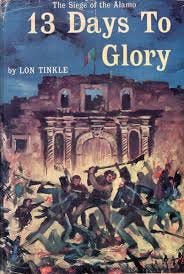
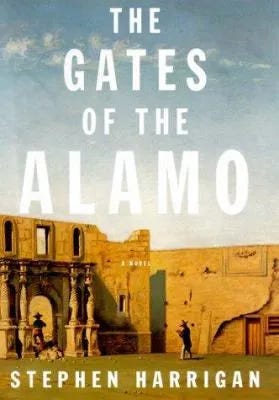
Several works stand out for their ability to balance history with narrative drive. Thirteen Days to Glory by Lon Tinkle presents a focused account of the siege, drawing from available records while maintaining momentum. John Myers Myers, in The Alamo, approaches the subject with similar intent, shaping the material into a cohesive narrative without losing sight of the individuals involved. Stephen Harrigan’s The Gates of the Alamo expands the frame further, introducing fictional figures alongside historical ones and allowing the story to unfold from multiple perspectives. By blending invention with fact, the novel reflects the larger truth of how the Alamo functions in cultural memory—placing readers inside the event rather than observing it from a distance.
Not all reinterpretations aim for historical weight. Modern fiction has imagined alternate outcomes, including stories where contemporary soldiers return to the past with advanced weapons, altering the balance of the siege. These variations don’t seek accuracy—they explore possibility, asking how the meaning of the Alamo changes when the result shifts. Other works place the Alamo within contemporary conflict, using the mission as a symbol for current fears and divisions rather than a historical moment, reflecting how the past continues informing present concerns.
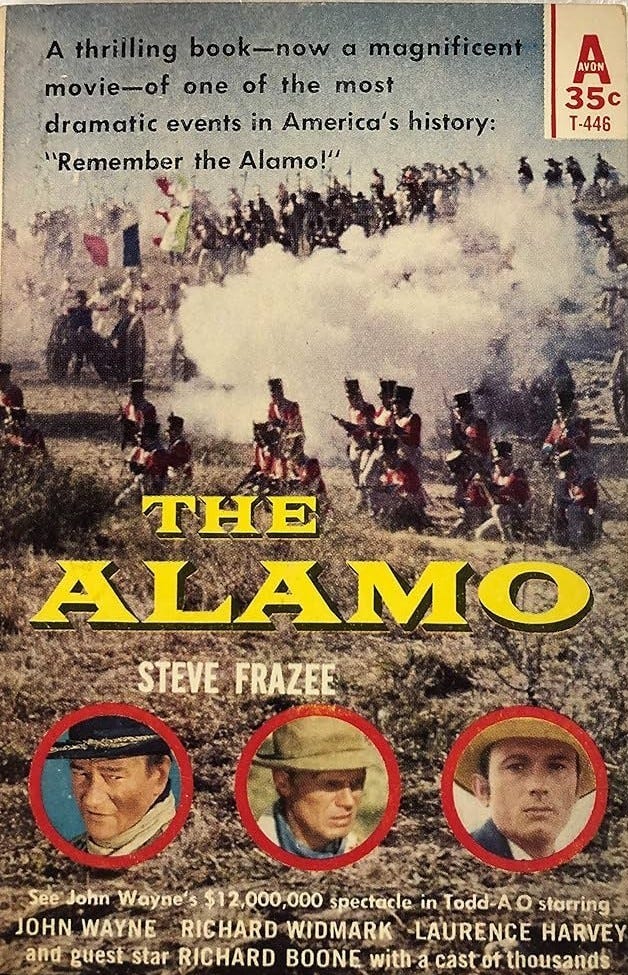
Film and television have played a central role in shaping the public image of the Alamo. John Wayne's The Alamo stands as the most ambitious of these efforts—years in development, financed in part by Wayne himself, combining spectacle with strong patriotic themes at a scale few others matched. Casting choices created tension both on and off screen. Historical accuracy gave way at times to dramatic necessity. Even so, the film brought the Alamo into popular consciousness in ways earlier works had not.
Television productions, constrained by budget, focused more on character than spectacle, with mini-series such as Thirteen Days To Glory attempting to correct perceived inaccuracies while working within the limitations of the format. Some films used the Alamo as starting point rather than central focus, building narratives around its aftermath or symbolic impact. The Man from the Alamo uses the battle as backdrop for a story centered on reputation and sacrifice—one man leaves the fight to warn others, returns branded as a coward, and carries the truth alone. The tension between perception and reality runs through nearly every version of the story in one form or another.
Commercial adaptations extend the reach further. Toys, comics, and games transform the event into objects of engagement, often simplifying or altering its meaning. A playset depicting the siege turns tragedy into recreation. These forms may seem at odds with the gravity of the event, though they demonstrate how deeply the Alamo has entered cultural awareness. Each retelling selects a focus—heroism, sacrifice, strategy, loss—and builds outward from there. No version captures the whole. Together they form a composite, a layered understanding accumulated over time.
The mission still stands in San Antonio, preserved as a site of memory. Visitors walk its grounds aware of what occurred, though perhaps uncertain of the details. The structure remains fixed while the meaning keeps moving—carried forward through history, fiction, film, and the particular stubbornness of a story that has never quite decided it’s finished.
In high school, I found myself in San Antonio TX as part of a marching band competition. Of course we went to the mission, and because they had Lon Tinkle’s book for sale, I had to have it.
The John Wayne film is fun and I found myself (starting with VHS) buying copies as they were upgraded - pan and scan to letterbox to director’s cut, etc.
At a memorial service for a Hollywood Stuntman I ran into Michael Wayne (John’s son) who oversaw the business end of his late father’s world). In mock frustration I told him, “do you know how many times, I have had to purchase “The Alamo?” He laughed and shook my hand, “thank you for doing so!”
The Alamo in history, story, and films continues to resonate!
Great article! I've always said there is about three minutes of actual history in John Wayne's THE ALAMO but that doesn't mean it isn't a great movie...one I've watched like 30 times since I was six years old.