THE LAZARUS MAN

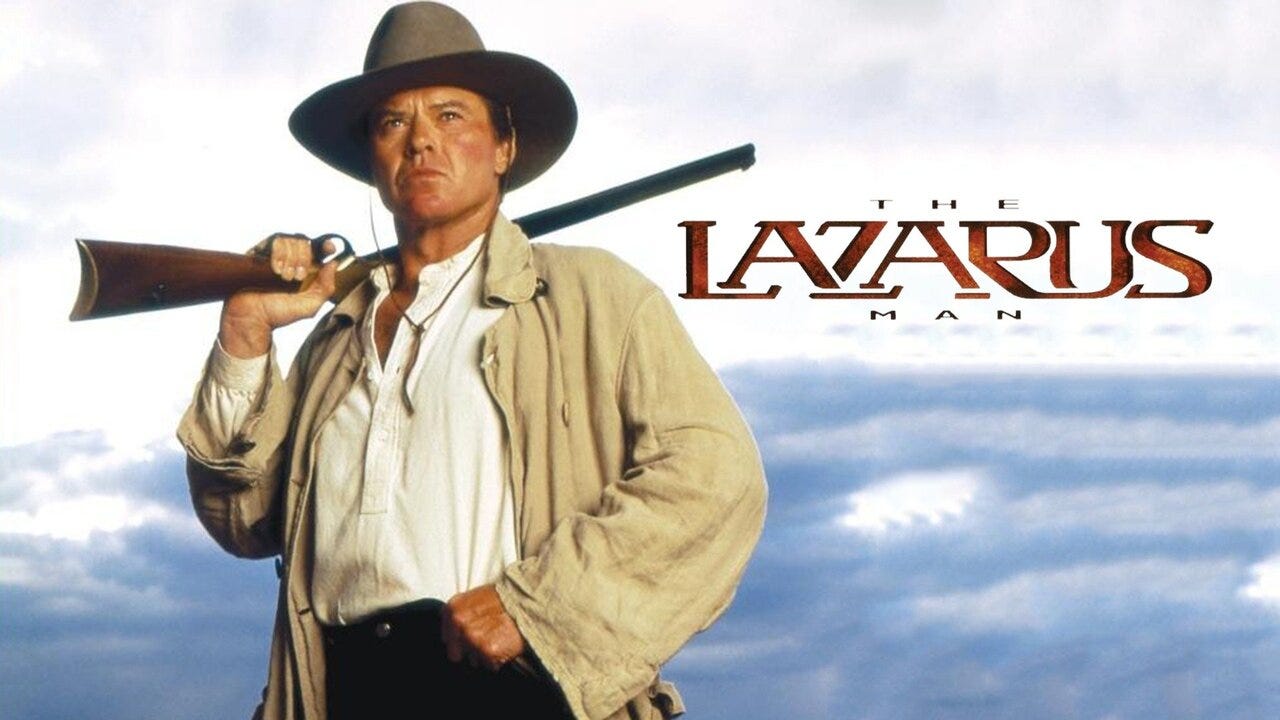
Something has happened to me which I do not understand. All I know for certain is I am alive. How I got here? Who I am? I do not know, but I must’ve seen or done something, something terrible to be buried alive, to be left for dead. I can remember nothing of my life, my friends or my enemies, but the key to my identity lies somewhere out there. I will search until I find the man I was...and hope to be again.
In the fall of 1865, shortly after the Civil War ends, an amnesiac claws his way out of a shallow grave outside San Sebastian, Texas. He wears a Confederate uniform and carries a U.S. Army revolver, a contradiction hinting at a fractured past. One image lingers—a man in a derby hat attacking him. Taking the name Lazarus, drawn from the biblical figure raised from the dead, he begins a search for identity and purpose. Along the way, he encounters men who still want him dead, while fragments of memory surface—each tied to the night President Abraham Lincoln was assassinated and the possibility he played a role in events surrounding it.
As the series unfolds, Lazarus is revealed as James Cathcart, a U.S. Army captain assigned to Lincoln’s personal security detail. On April 14, 1865, at Ford’s Theatre, Cathcart senses danger and moves to intervene. Before he can act, he is struck from behind by his superior, Major Talley, a traitor aligned with forces seeking Lincoln’s death. The buried memories, scattered and incomplete, form the spine of the narrative, driving both mystery and moral reckoning.
Starring Robert Urich, whose easy presence and grounded authority anchor the series, The Lazarus Man found a modest but loyal audience during its first season on TNT. Urich brought with him a long résumé across television and film, including his role as Spenser in the adaptation of the novels by Robert B. Parker, and a Golden Boot Award recognizing his contributions to the Western genre. His performance here carries quiet weight, balancing vulnerability with resolve.
Despite solid ratings, production halted before a second season could begin. In late 1996, Urich received a diagnosis of synovial cell sarcoma, a rare and aggressive cancer. Although TNT had ordered another season, Castle Rock Entertainment chose not to proceed and declined to honor Urich’s contract. Urich filed suit, maintaining his intention to continue working while undergoing treatment.
His response mirrored the resilience of the character he portrayed. Urich continued acting when possible and became an active advocate for cancer research. By 1998, he was declared cancer free and returned to television in Love Boat: The Next Wave. He later appeared on Broadway in Chicago, taking on the role of Billy Flynn, and continued working until his illness returned. Urich died in 2002 at age fifty-five.
The Lazarus Man remains a series of considerable promise, cut short before its full design could emerge. Its central idea—a man stripped of identity, forced to reconstruct both memory and morality—offers a Western shaped as much by introspection as by action. An added layer lingers beyond the screen. Urich’s own fight, collapse, and return echo the journey of Lazarus himself. Performance and life intersect in a way few series achieve, leaving behind a story unfinished, yet resonant in its ambition and intent.